Showing posts with label PIXAR. Show all posts

Friday, July 11, 2025

My Top Eleven Best PIXAR Shorts

Ahhh, PIXAR. There once was a time when you were the Kings of Animation. People loved you. You were creating critically-acclaimed film after critically-acclaimed film. Buying you helped Disney get out of their animated "Dork Age". You helped shape a majority of peoples' childhoods... which didn't stop everyone from turning on you after Cars 2 was released. Now everyone seems to be convinced that you can't make a good film ever again. Even your post-Cars 2 films that DID receive critical acclaim, like Coco and Elemental, were met with skepticism before they were released. Their most recent film, Elio, has basically been sabotaged by Disney - I went to see it in theaters, but apparently everyone else either doesn't know that it exists or would rather go see the Lilo and Stitch remake again instead. Shame on those guys.

In addition to their many great animated movies, PIXAR is also known for making many great animated short films. Usually, they'll stick these before their movies in theaters (for example, the short Sanjay's Super Team was shown before The Good Dinosaur) and then can be found on the movie's DVD release. Some of them, however, were made even before the first Toy Story. And then there are some that are based on one of their movies and could be found as a bonus feature on the DVD (like the Incredibles "midquel" short Jack-Jack Attack). I remember back in... 2009, maybe, ABC aired a compilation of PIXAR shorts around the holiday season. That's how I saw some of these shorts for the first time.

Today, I'm going to make a list of my personal favorite PIXAR short films. Specifically, I've narrowed it down to eleven... no Nostalgia Critic comparisons, please. These are in no particular order. I'm obviously not the first person on the internet to do a list like this, but since when has being unoriginal stopped me before? And please don't be mad if a short you really, really like isn't on the list (apologies in advance to all you fans of Red's Dream out there - that terrifying clown guaranteed that it wouldn't be on the list). Let's get started, shall we?

"Luxo Jr." (1986)

Let's start off with this early one. Luxo Jr. introduced the world to the little lamp who would become PIXAR's mascot. It was also PIXAR's first animation after Ed Catmull and John Lasseter left Industrial Light and Magic, and the first CGI film to be nominated for an Academy Award (it received an nomination for Best Animated Short Film).

The plot is very simple: little lamp has a ball. It plays with it. It pops it. Okay, it's not exactly Shakespeare, but who cares? The short is a nice demonstration of how you can give a personality to something that doesn't even have a face. I mean, would YOU look at this...

...and think "Maybe we could make a fun short film out of that?" I doubt you would. But PIXAR did it, and it actually managed to make audiences fall in love with that little lamp. Now, whether or not this short increased sales of actual Luxo lamps, I don't know.

Oh, and here's a fun fact for you - Luxo Jr. inspired WALL-E. Andrew Stanton revealed that in an interview. You can't NOT like a short that inspired WALL-E.

"Mike's New Car" (2002)

Monsters Inc. is my personal favorite PIXAR movie, so I guess it's not too big a surprise that I have a short featuring the characters on the list. Mike's New Car focuses on Mike (voiced once again by Billy Crystal) introducing Sulley (John Goodman) to his new car. What was wrong with his old car? It didn't have six-wheel drive - Mike's new car DOES!

This was the first PIXAR short to A) have dialogue and B) include characters from one of their movies (unless you count those Toy Story Treats shorts they aired on ABC in the 1990s). Just like the movie, this short is hilarious - it's basically five minutes of Mike getting put through the wringer. That scene with Sulley messing around with the adjustable seat alone is funnier than any of the jokes in Modern Family. As co-director Roger Gould put it, "If this were a live action film about two guys in a car, you could do some pretty silly things with the car. But a car in the monster world has greater room for exaggeration. A car seat in the real world - you can adjust it vertically a couple of inches up or down, but because monsters come in so many shapes and sizes, a monster car would have to be able to have a hydraulic lift that could raise or lower the seat five or six feet within the space of the car. Those were the kinds of things we could go berserk with when the car started going crazy and Mike and Sulley started to get slammed around inside it."

Really, Mike is the kind of character that could easily star in a whole series of humorous short films. He's like the PIXAR equivalent of Daffy Duck. So it's kind of weird that of all the shorts PIXAR has made, he's only appeared in two - this and 2014's Party Central, based on Monsters University. Which I have not seen yet. I'll have to get on that...

"La Luna" (2012)

This one was released in front of Brave, PIXAR's 2012 release that had the misfortune of being the first PIXAR film to be released after Cars 2, when "PIXAR sucks now!" claims were in full swing. I haven't seen Brave in years, maybe I should rewatch it at some point...

Basically, La Luna is a children's picture book from the 1960s or 1970s (maybe the 1950s too?) come to life. From the character designs to the gentle tone to the whimsical plot, this feels like it easily could've been adapted from something Maurice Sendak wrote. I mean, the plot is that a boy, his father, and his grandfather sweep stars off the moon. Why are they doing that? Well, I won't give it away. The short's director, Enrico Casarosa, went on to direct Luca in 2021, and in hindsight it's pretty obvious they were made by the same guy. They have very similar vibes, and even similar character designs (the dad in this looks a LOT like the girl's dad in Luca).

According to Enrico Casarosa, "I've always been fascinated by fantastical stories of the moon: is it made of cheese? Milk? A hole in the celestial mantle? I wanted to invent my own fantastical lunar myth. Authors like Antoine de Saint-Exupery and Italo Calvino were a huge influence and a source of inspiration for this story." The short's music was composed by Michael Giacchino, who did the music for several of PIXAR's movies, who was asked to "immerse himself in his Italian roots".

This short, if I could sum it up, is like being wrapped in a warm blanket on a rainy night and drinking a mug of hot chocolate. It just makes you feel good. I've gotta ask, though... aren't the boy, the dad, and the grandfather wreaking havoc on the Earth's tides?

"Your Friend the Rat" (2007)

Poor rats. They get no respect. I don't know how the mindset that rats = evil got started. Yeah, they live in sewers, but so do the Teenage Mutant Ninja Turtles and everybody loves THEM. Ratatouille is one of the few animated... well, ANYTHING that portrays them as anything other than the rodent equivalent of pond scum. So it makes sense to have Remy and Emile (voiced once again by Patton Oswalt and Peter Sohn) star in a short film advocating for people NOT to think so little (no pun intended... y'know, since rats are little) of rats.

Utilizing a number of different animation styles, the short sheds a little light on the positive qualities of the mouse's not-as-popular sibling. I have no official confirmation on this, but I'm almost positive that this short was inspired by the work of Disney animator Ward Kimball - from the art style to the numerous jokes it throws at us. I dare you to watch this short without laughing at least once. We even get cameos from P.T. Flea and WALL-E.

Everything culminates in a wonderful musical number. Who knows, maybe Remy and Emile are on to something... maybe we WOULD have world peace if we just lived in harmony with rats. Just so we're clear, I'm not suggesting that you go out and hug a rat, I'm saying that if you see one you shouldn't, say, poison it. Rats have feelings too.

"The Blue Umbrella" (2013)

Most of PIXAR's films aren't exactly love stories, but there's usually some sort of romance subplot in there, even if it's not the focus. A Bug's Life had Flik and Atta, Cars had Lightning and Sally, Ratatouille had Linguini and Colette, and I'm not quite convinced that Inside Out didn't have something going on between Joy and Bing Bong (I know, I'm weird). This is one of the few PIXAR productions to be a full-on love story, the others being WALL-E and Elemental.

The Blue Umbrella, released in theaters before Monsters University, takes place in a city where everything is sentient: storm drains, mailboxes, buildings, traffic lights, and of course, umbrellas. It's your typical love story: boy meets girl, they hit it off, but they get separated and he struggles to get back to her, but they reunite and live happily ever after. But instead of humans, the main characters are umbrellas, which makes the short a lot better than one of those dull live action romcoms.

Saschka Unseld, the short's director, was inspired to make it when he was walking down a rainy San Francisco road and saw an abandoned umbrella just sitting there getting rained on. "Rain is a magical place," he explained in an interview with The Hollywood Reporter. "I wanted the soul of the film to be a love declaration to the rain, that celebrates the rain." I love the combination of photo-realistic humans (whose faces we never see) with the slightly anthropomorphized buildings, traffic lights, mailboxes etc. and the umbrellas with their black dot eyes and little smiles. I also love how the entire city seems to be helping the titular Blue Umbrella find his love.

Here's an embarrassing story related to the short: I saw Monsters University in theaters twice. The first time I saw it, I didn't see this short because I had to go to the bathroom and was in their for the duration of the short, fortunately making it back before the actual movie started. It wasn't until I saw it the second time that I saw this short, which I'll admit has more of an atmosphere when watched in a dark movie theater as opposed to my house with sunlight pouring through the windows. A lot of PIXAR shorts are like that. My suggestion - wait until night to watch this one.

"Presto" (2008)

How exactly DO magicians pull rabbits out of their hats? We may never know - magicians never reveal their secrets (except the Great Reveal-o. You all got that reference, right?). Presto Digitation, one of the two main characters in this short, pulls it off using two hats, one he might've gotten on loan from Mickey Mouse and a regular ol' top hat. He puts the Mickey hat on the head of his pet bunny, Alec Azam, and then sticks his hand into the top hat to pull him out. But before tonight's performance, Presto has made the mistake of not feeding Alec. And a hungry rabbit is not about to cooperate.

Animating the theater audience that Presto performs for was very expensive. To save time, most of the audience models - shown mostly from the back - were borrowed from Ratatouille (Presto's body from the neck down was also reused from Skinner's lawyer). Originally, the conflict of the short was going to be that the rabbit just had stage fright, but according to director Doug Sweetland, the idea was reworked because it was too complicated. At its core, this is PIXAR channeling Tex Avery and his Looney Tunes work, with other influences being the Marx Brothers, Charlie Chaplin, and Tom and Jerry. So basically, PIXAR made a modern Looney Tunes cartoon far better than anything Larry Doyle and his crew cranked out.

However, the cute little bunny Alec doesn't feel much like Bugs or any of the other Looney Tunes characters. There's a vulnerability to him that makes it easier to feel sorry for the little guy, helped by the fact that (unlike Bugs) he doesn't seem to actually be in control of the situation - he doesn't just stand there and make smug faces just before he messes with Presto. This character probably could have carried a whole movie, but with these PIXAR shorts, less is more.

Oh, and keep an eye out for a cameo appearance from The Muppets' Statler and Waldorf. There are a lot of Muppet fans at PIXAR.

"Boundin'" (2003)

Released in theaters before The Incredibles (though it debuted prior to that via special screenings of the short at the Laemmle Theatres), Boundin' is I believe the first PIXAR short to have dialogue in it. Directed by Bud Luckey, who also voices all of the characters, the short tells the story of a vain sheep very proud of his fluffy white wool. Then one day his wool is sheared off, leaving him, as he puts it "ridiculous, funny and pink". He's humiliated... until a wise Jackalope shows up to give him a pep talk.

Originally, Brad Bird wanted Bud Luckey's character in The Incredibles, Rick Dicker, to appear at the beginning of the short - he'd show up, start playing a banjo, and act as the narrator. Also worth noting, a few models are reused from Finding Nemo - some of the fish who appear are recolored models of Gurgle (y'know, the fish in the tank who shouts "CURSE YOU, AQUASCUUUUUUUUUUUM!"?) and the arm that grabs the lamb is none other than that of Dr. Philip Sherman. Stanley, the founder of Radiator Springs from Cars, also makes an appearance three years before that film's release - as the sheep-shearers' car.

With its western location and cast of cheery desert critters, it's hard not to like Boundin'. It's also one of the only PIXAR shorts to have a genuine moral. As the Jackalope puts it, "Does it matter what color? Well, that gets a 'nope', be it pink, purple, or heliotrope. Now, sometimes you're up, and sometimes you're down. When you find that you're down, well, just look around. You still got a body, good legs and fine feet, get your head in the right place and, hey, you're complete. Now, as for the dancin', well, you can do more. You can reach great heights, in fact, you can soar. You just get a leg up and you slap it on down, and you'll find you're up in what's called 'a bound'." I think we need that Jackalope in today's world more than ever.

"Piper" (2016)

First of all, compare the birds in this one to the birds in a previous PIXAR short, For the Birds. PIXAR's come a long way (not that the birds in For the Birds look bad, it's just that the birds in Piper look a lot better).

I really don't have much to say about this one other than "d'aaaaaaaaaaaaw, the baby bird is soooooooooooo cute!". But I'm okay with that. I'm a sucker for cute baby animals. Plus, the short really does capture the feeling of going to the beach and playing in the water. All that sand and grimy stuff in the water when it washes over the baby bird? So accurate...

Piper was directed by Alan Barillaro, who was inspired to make the short when, on a morning jog in the Bay Area, he saw hordes of sanderlings (that's the species of the bird in this short) scampering away from the water and then scampering back once it receded to eat. He and his crew spent weekends on beaches searching for shorebirds - and encountering hermit crabs, which inspired the hermit crab that appears in the short. And fortunately, he also fought the urge to make the characters more anthropomorphic or have them talk. "It's always fun to show a world we're familiar with but from a different perspective," he said. "We've all been to the beach, but have we ever viewed water from just an inch off the sand? That could be very fearful from a bird's perspective."

The short was released in front of Finding Dory, another PIXAR film that I seem to be in the minority on liking (much like Monsters University, it got mostly positive reviews from critics but is nowadays lumped in with Cars 2 as one of those supposedly so awful PIXAR sequels that they made in the 2010s). Fitting, seeing as they're both focused on water. You could probably insert the baby bird into Finding Dory and it would fit in even among the more cartoony main characters. If you like cute birds, you'll like Piper. What else is there to say, honestly?

"Lou" (2017)
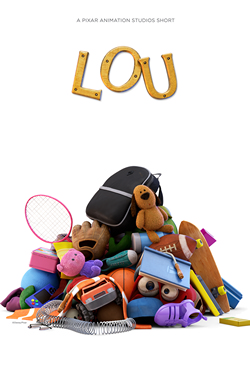
I didn't see this one until much recently. Like, earlier this month. It was released in front of Cars 3, and I didn't see that one in theaters. In fact, I didn't see ANY movies in theaters during 2017.

Lou stars one of the most mesmerizing characters that PIXAR has ever created. He's a being made out of all the items in a school's lost and found box. His eyes are baseballs with black button pupils, his "head" is a red sweater with the neckhole serving as a mouth, and if need be he can literally pull himself together. He likes to help the kids at the school find whatever items they've misplaced - and when he sees one kid stealing things from his classmates, he decides that a lesson must be taught.

I'm not exaggerating when I say that Lou is a mesmerizing character. The way they animate this character, constantly "shapeshifting" as he runs with his "body parts" rearranging themselves, is almost magical - like, remember the Greedy from the Raggedy Ann and Andy movie? Remember how that character was constantly flowing around, shapeshifting, contorting into different shapes? Lou is sort of like the CGI equivalent of the Greedy. If this character were in, say, a horror movie or one of those survival games on the internet, he'd be very creepy... but PIXAR, of course, managed to make him endearing.

Oh, and there's also a lesson about how being nice is nice. And an ending that's honestly pretty bittersweet. But I won't give anything away. You'll have to watch the short for yourself.

"Day and Night" (2010)

How do you personify daytime and nighttime? Leave it to the folks at PIXAR to figure out how.

Here we have these two blob-like characters, one being the personification of day and the other being the personification of night. They aren't sure what to make of each other at first, but soon become friends. This short is unique in that it combines PIXAR's usual CGI with hand-drawn animation (there's clearly some more Ward Kimball influence here), specifically by having hand-drawn characters with CGI bodies. I have no idea how they did it... though there's probably some video on YouTube that explains it.

The combination of two different animation styles is the short's main gimmick, but there are a lot of clever gags in it as well. I love how Day yawning is represented by the crowing of a rooster, and how his going to the bathroom is represented by a rushing waterfall (I know, it's toilet humor, but I still found it funny). The characters, despite being in a black void where cartoon physics run rampant, really do feel "weighed down" so to speak by the scenery inside them, which is a really nice touch. It's one of the most experimental things that PIXAR has ever done. And this is coming from somebody who just watched it on their laptop - I don't know how much more impressive it looked on the big screen (it was released in front of Toy Story 3, which I did not see in theaters... stop judging me!).

Watching this really reminded me of how much I think PIXAR should try their hand at a full-length hand-drawn movie. From my understanding, the PIXAR crew was dismayed when the industry decided to abandon hand-drawn animated films in favor of CGI (their intent when making Toy Story was never to have CGI replace hand-drawn animation). With that in mind, I think they'd be just the studio to help theatrical 2D films make a comeback. Though I'm not sure if Bob Iger would let them do it...

"Burrow" (2020)

Speaking of PIXAR and 2D animation, I believe this was their first fully-2D short film. The original plan was to release it in theaters before Soul, but the Covid-19 pandemic put a dent in that plan, so it wound up released on Disney Plus as part of PIXAR's "SparkShorts" series. When Soul eventually did get a theatrical release in 2024, this was shown in theaters before it.

Like La Luna, Burrow feels like a children's picture book come  to life - in this case, something written by the likes of Beatrix Potter or Arnold Lobel. And like Presto, it stars a rabbit. This one wants to dig a nice burrow, but keeps getting waylaid by encounters with other animals - a mole, a mouse, hedgehogs, frogs, newts, bugs, etc. And like Boundin', it has a moral to it: in this case, that solitude is overrated.

I didn't notice it until I saw it brought up in an interview with the short's director, Madeline Sharafian, but this short actually makes for a pretty good parallel to what was going on during the pandemic. Not to brag, but I think those of us who live with other people had it at least a little better during the pandemic because, even if we were stuck in our homes, we at least weren't alone. And jeez, has it really been four years since the pandemic ended in 2021? Still feels like it was just yesterday...

Combining a cozy atmosphere with cute cartoon animals, Burrow is a short that might not make you laugh, but it'll definitely make you smile.

HONORABLE MENTION: "Mr. Incredible and Pals" (2005)

The idea of this short is that, in the Incredibles universe, Mr. Incredible and Frozone were approached by about having a cartoon show featuring their likenesses (sort of like how celebrities like Chuck Norris, Mr. T, Louie Anderson, and Jackie Chan all had cartoon shows starring them). The show apparently never aired, but a pilot was made - and it is laughably bad. Like, if this were an actual show, I'd probably wind up reviewing an episode of it at some point. For one thing, it features Synchro-Vox. I was born looooooooong after the days of Synchro-Vox being used as an actual animation tool instead of just something used when a cartoon feels like being intentionally creepy. So this was actually my introduction to the technique (well, that and the pirate at the beginning of the SpongeBob theme song).

The short is a fun parody of cartoons from the days of very, very, very small budgets. I particularly love the inclusion of a rabbit named "Mr. Skipperdoo". But, to be honest, the short itself is not the Honorable Mention here. The COMMENTARY is. Yep, the short actually comes with commentary by the actual Mr. Incredible and Frozone. And it is a riot. I would not be surprised if there was no script, they just put Craig T. Nelson and Samuel L. Jackson in the recording booth, had them watch the cartoon, and they just ad-libbed everything. I particularly love Frozone's mockery of the animation style ("Why's everybody got lady lips?! Are those human lips?! Whose lips ARE those?!").

And now I'm wondering... who would win in a fight? Mr. Skipperdoo or Alec from Presto? I'm betting on Alec myself. What do you think?

Further reading:
- BuzzFeed's 2021 ranking of every PIXAR short made at that point
- Screen Rant's 2024 ranking of every PIXAR short made from that point
- Vulture's 2015 ranking of every PIXAR short made from that point

If you'd like to watch these shorts for yourself (which I highly recommend doing), you can find them - and several other PIXAR shorts that aren't on the list - on Disney Plus. Or you could just get out the DVDs of whichever PIXAR movies these were released with and see if they're in the bonus features.

Say, maybe the reason why Elio isn't making more money is because it didn't have a short in front of it... I dunno, just a theory.

Friday, March 7, 2025

Did You Know? - Fun Facts About "Finding Nemo"

Welcome to another edition of a series that I like to call Did You Know?. Inspired a little by the Nostalgia Critic's "What You Never Knew" series, this series will allow me to share with you some interesting tidbits, behind-the-scenes information, and fun facts about an animated movie or TV series. Because I like sharing new information with people.

Let's talk about Finding Nemo.

Finding Nemo is one of PIXAR's most iconic films. It was a massive success at the box office, was beloved by critics, and won the Academy Award for Best Animated Feature. I don't know what it was about the movie that made people flip out. But it's certainly one of PIXAR's best, and if you haven't seen it yet, I would recommend doing so right now (oh, and thanks for crawling out from under that rock to read my blog).

Why was the film such a big hit? Many assumed it was because people just really, really liked fish, and started making their own animated movies about fish in a desperate attempt to cash in (which is how we got Shark Tale). If you ask me, though, I think it was a combination of things - likeable characters, funny jokes, great animation, and just the right amount of sentiment and sincerity. But what do I know?

There's a lot of interesting facts that I'd like to share with you about this movie. You probably already know that the film's writer is also the voice of Mr. Ray. We already talked about the planned direct-to-video sequel that Disney was going to make without PIXAR but didn't get off the ground. And I don't need to tell you that Nemo makes a few cameos in Monsters Inc. But did you know any of THESE things?

NOTE: This post is long. I would recommend getting a snack. Unless it's fish sticks, that just feels wrong to eat when you're reading this (for obvious reasons).

1) Usually, when a PIXAR movie is first thought up, the story treatment is written AFTER the film is greenlit. But in the case of Finding Nemo, Andrew Stanton already had a script completed BEFORE the film was greenlit.

Concept art featuring Nemo.

John Lasseter said, "I remember when we were working on A Bug’s Life, Andrew had this great little drawing that he did over his desk which showed two small fish swimming alongside a giant whale. And I always liked that. He told me it was something he was thinking about but I didn’t hear anything more about it until the pitch. I’ve been a scuba diver since 1980 and I just love the underwater world. When he pitched this idea, I knew that it was going to be amazing in our medium. We always pride ourselves at Pixar on matching the subject matter of our movies with the medium. I really did know when he said ‘fish’ and ‘underwater’ that this film was going to be great."

2) How did Andrew come up with the film? It was a number of things, really. One of them was a 1992 visit to Marine World that got him thinking about the possibilities of recreating the undersea world in computer animation. Another was memories he had of a fish tank in a dentist's office and wondering if the fish inside would ever try to escape back to the ocean. And another was his relationship with his son - he was acting particularly overprotective on a trip to the park and "became obsessed with this premise that fear can deny a good father from being one".

Andrew said, "Telling a story where the protagonist is the father got me excited. I don’t think I’ve ever seen an animated film from that perspective. It made me interested in wanting to write it because I knew I could tell that story. I also thought that the ocean was a great metaphor for life. It’s the scariest, most intriguing place in the world because anything can be out there. And that can be a bad thing or a good thing. I loved playing with that issue and having a father whose own fears of life impede his parenting abilities. He has to overcome that issue just to become a better father. And having him in the middle of the ocean where he has to confront everything he never wanted to face in life seemed like a great opportunity for fun and still allowed us to delve into some slightly deeper issues."

More concept art.

3) A lot of research was done by the animators working on the film. They visited aquariums, went diving in Monterey and Hawaii, studied the fish in a tank at PIXAR, and even attended in-house lectures from an ichthyologist. They also rewatched animated Disney movies that had underwater scenes in them, such as Pinocchio, The Sword in the Stone, Bedknobs and Broomsticks, and The Little Mermaid. But the one Disney film that inspired them the most was one that didn't take place underwater at all - Bambi. According to Andrew Stanton, "We kept coming back to Bambi because of the way the filmmakers adhered to the real nature of how these animals moved and what their motor skills were. They used that as the basis for getting as much expression, activity and appeal. We wanted our characters to work in that same way. We thought of it as Bambi underwater."

4) Jess Harnell mentioned in a video on YouTube that he read for Crush before Andrew Stanton decided to voice the character. He recorded all of Crush's dialogue while laying back on a sofa in Lee Unkrich's office. In addition to Crush, Andrew Stanton also voiced the lobster who tells his friends about Marlin's journey (he has a Massachusets accent because there are a lot of lobsters in New England) and some of the Seagulls.

Before Jess, however, PIXAR's initial choice for Crush might have been, believe it or not, Sean Penn. They did an animation test of Crush speaking in Sean Penn's voice (kind of like that animation test they did of Buzz Lightyear speaking in Billy Crystal's voice).

Concept art of Nemo's Dad... I mean, Marlin.

5) To animate the characters' expressions, the film's animators studied... dogs. Yes, dogs. Fish don't have as big a range of facial expressions. Speaking of dogs, they also wanted Bubbles (the yellow fish in the tank who's obsessed with bubbles) to be like a puppy dog.

6) Dory was originally going to be a male character. Then Andrew Stanton watched an episode of Ellen and realized that Ellen DeGeneres was perfect for the role. The intent was for Dory to be a surrogate child for Marlin, someone he could work out his parenting troubles on.

In turn, Gill is intended to be sort of a surrogate father for Nemo. He was originally going to be the anti-Marlin, the sort of father that Nemo would love to have eventually realize that Marlin was better. In fact, they were originally going to have Gill tell Nemo about his life in the ocean, only for Nemo to eventually find out that Gill is a liar who took all of this from a storybook in the dentist's office waiting room. This was cut because otherwise the audience would probably hate Gill for being a lying liar from Liarsburg.

Concept art for the sharks.

7) Why is the fish tank where Nemo winds up in a dentist's office? According to the filmmakers, it just seemed like a good place for potential gags and "odd juxtapositions of things" - having it be in a kid's room or an apartment would've been a bit too obvious. When crafting the personalities of the fish in the tank, they liked the idea of it sort of being like a Loony Bin, and rewatched films like One Flew Over the Cuckoo's Nest to get ideas. Bob Peterson also reached out to his hygienist to make sure the steps of the root canal that Dr. Sherman performs on somebody were correct.

8) Here's another fun fact about the dentist - when he goes to the bathroom, he doesn't wash his hands. Reminder: he is a DENTIST.

9) Bruce was named after the great white shark from Jaws - I haven't actually seen Jaws, so I don't know if the shark's name is ever mentioned in the movie, but the shark models they used were all named "Bruce" after Steven Spielberg's lawyer, Bruce Raymer.

There's also a theory online that Bruce is actually the son of the shark from Jaws. No, really. Look it up.

More concept art.

10) According to supervising animator Dylan Brown, "Each film has its own unique set of challenges and we always begin by trying to figure out what they are and how to solve them. With Nemo, we had an entire cast of fish characters with no arms or legs. Since they didn’t have the traditional limbs to allow strong silhouettes, we had to invent a whole new bag of tricks. In the beginning it was a bit daunting and frustrating. We began analyzing what was appealing in terms of posing fish. We put a lot of work into the face and getting the facial articulation just right. We didn’t want them to be just heads on sticks like in a Monty Python sketch. Their faces had to be integrated with the entire body language. Where a human character might just turn his head to look at something, a fish might turn his head just a little and the entire body would pivot along with it. Another big factor for us was timing. With characters like Buzz, Woody or Sulley, you have an earth-based gravity. But fish underwater can travel three feet in a flash. You blink and the thing is gone. We were wondering how they did that and studied their movements on video. By slowing things down, we could figure it out. Our timing got very crisp as we learned how to get our fish characters from one place to another in the course of a frame or two. We always tried to incorporate naturalistic fish movements into the acting. By putting things like one-frame darting and transitioning from one place to another into our acting, the characters became very believable.”

11) Adam Summers, a noted professor in the Ecology and Evolution Department at the University of California at Irvine, helped out when it came to animating the fish. He said, "I remember speaking with character designer Ricky Nierva about a fish character and he asked, ‘Where would the eyebrows really be?’ I told him fish don’t have eyebrows. They don’t have any muscles in their face except for jaw closers. Ricky said, ’Adam, fish don’t talk but talking is going to be a requirement for the movie. So we’re going to have to be taking artistic license with science all the time.'"

12) This was the first PIXAR film to not have Randy Newman composing the score. His cousin, Thomas Newman, did the honors. On a more morbid note, Finding Nemo is also the first PIXAR movie to have blood in it.

Concept art of a terrifying-looking Dory.

13) Gill is a Moorish Idol. Apparently, these fish are difficult to keep in captivity, so him being the one most obsessed with escaping the tank makes sense... although I don't think real Moorish Idols come up with elaborate escape plans.

14) For the scene with the jellyfish, PIXAR created an entire new system of shading called "Transblurrency"... it's see-through but blurred, like a frosted bathroom window. The scene contains no less than 74,472 jellyfish. That's a lotta jellyfish.

15) If there's one thing you should keep an eye out for in PIXAR films, it's references to their other movies. For example, that Pizza Planet Truck from Toy Story that's made a cameo in every PIXAR film since (with the possible exception of The Incredibles) appears during the scene where Gill is describing his plan to escape the fish tank.

That's not the only Toy Story reference. Notice anyone familiar among the toys in the dentist's waiting room?

Speaking of the waiting room, that boy who sees the chaos going on through the fish tank near the end of the film is reading a Mr. Incredible comic book.

A more subtle reference to another PIXAR film can be found in the dentist's office. That mobile hanging from the ceiling is actually the same mobile Boo from Monsters Inc. has in her bedroom.

Luigi from Cars makes a cameo just before we see that the Tank Gang succeeded in escaping from the fish tank (sorry, spoiler alert)...

And quite possibly the best reference to another PIXAR film in the whole movie...

16) Animators were sent to aquariums, sent on oceanic dives, given lectures by an ichthyologist, and had study sessions in front of the gigantic fish tank in PIXAR's production office before they started work on the film. It worked a bit too well, as the initial animation the did of the ocean was deemed too realistic.

17) Michael Eisner expected the film to be a box office bomb. Boy, was HE wrong!

18) According to the diploma hanging up on the wall in his waiting room, the dentist graduated from the "PIXAR University School of Dentistry".

That's one of the little green aliens from Toy Story on the seal.

19) The hardest scene in the film for the PIXAR animators to do was the scene with Marlin and Dory inside the whale, due to a combination of lighting issues and having to deal with all of the water splashing around inside the whale's mouth. The original plan for this sequence was to have Marlin and Dory inside the whale's STOMACH as opposed to its mouth. There was just one problem with this, as Oren Jacob put it - "There were only two ways out."

20) Pearl, one of Nemo's classmates, is a flapjack octopus. And that is a species that doesn't live in the Great Barrier Reef. Also, their mouths are under their tentacles, whereas Pearl's mouth is just under her eyes. This is another one of those Artistic License things.

Another example of Artistic License: y'know that joke where one pelican thinks his buddy farted after the underwater submarine blows up? Birds actually can't fart.

Concept art for Nigel and his pelican pals.

21) William H. Macy was originally cast as the voice of Marlin. However, after a test screening, the filmmakers decided that his performance was too dramatic and lacked the warmth needed for Marlin, so they replaced him with Albert Brooks, who Andrew Stanton claimed saved the movie. While Albert enjoyed working on the film, he was disappointed that he didn't get to record his dialogue with the other cast members, unlike when he lent his voice to The Simpsons, because he couldn't ad-lib off the other actors.

22) Dory muttering "Sea monkey's got my money..." in her sleep is a reference to the live action films Disney made in the 1950s and 1960s, like The Computer Wore Tennis Shoes. Apparently, most of those had a character say something along the lines of "The monkey's got my money!".

23) Gerald, the pelican who attempts to eat Marlin and Dory, was initially going to have a larger role. He and Nigel were to be an Odd Couple-esque comedy duo, with Gerald being the sloppy, messy slobby one and Nigel being the neater and more finicky one. Apparently, it didn't work out because it was "as stereotypical as it sounds" and each scene with them brought the movie to a halt.

24) Megan Mullaly was supposed to voice a character in the film at some point too, but she was fired because she refused to do the same voice she did for Karen Walker in Will and Grace. She didn't think it made sense for a fish who lives in a fish tank in a dentist's office "to be a fictious character from an NBC sitcom".

Concept art for Gill.

25) The names of the boats we see in Sydney Harbor are "Sea Monkey" (maybe the owner of the boat is the one who has Dory's money!), "Major Plot Point", "Bow Movement", "iBoat", "Knottie Buoy", "For the Birds" (a reference to the PIXAR short that was shown in theaters before Monsters Inc), "Pier Pressure", "Skiff-A-Dee-Do-Dah", and "The Surly Mermaid".

26) There was originally going to be a scene after Nemo gets flushed down the drain where he travels through a bunch of filtration machines, which is more accurate to how the sewage system works in real life. It was cut because it put too much focus on Nemo - Marlin is the actual main character. And also because it was basically just a repeat of the filter scenes earlier in the movie. Apparently, however, there is a level in the tie-in video game based on the scene.

27) How do you animate a sea anemone? The animators used the very same technology used to animate Sulley's hair in Monsters Inc. However, some strands were animated by hand.

Concept art for Jacques.

28) Darla is named after Darla Anderson, a PIXAR employee who was also the producer of Monsters Inc. Over the years, she's played a lot of pranks on Andrew Stanton and she thinks that this was his way of getting back at her.

29) At a test screening for the film, a mother who was part of the audience suggested cutting or toning down the scene with the anglerfish because she felt it was too scary for kids. Others disagreed - one brainy kid refuted, "If you tone down the anglerfish, it's like you're toning down nature itself."

30) It takes a lot of time to animate a gigantic school of fish. To make this easier, PIXAR created a tool called "Pisces" - fitting, since that sign is commonly represented by two fish circling each other.

Concept art for Crush, dude.

31) Each frame of animation took four days to render due to the complexity of animating underwater environments. According to supervising technical director Oren Jacob, "This film is far more complicated than Monsters, Inc in that almost every shot involves some kind of simulation program or simulated movement. On average, there are more things going on per frame in this movie than we’ve done before by a pretty significant amount. There was more interdependency between the various departments than ever before and we often went back and forth to make sure the lighting and other components looked just right."

32) The three tiki heads in the fish tank are caricatures of PIXAR employees Peter Sohn, Nelson Bohol, and Ricky Nierva.

33) The baby sea turtles' shells are modeled after Hawaiian shirts.

Y'all remember the Finding Nemo ice cream? I ate this!

34) The climax was inspired by an actual event. According to Andrew Stanton, he wasn't sure how to end the movie at first - he wanted something that would test Marlin and Nemo and what they've learned throughout. "But when you've already gone through jellyfish and sharks and all these other set pieces, you're like 'What's left?'," he said. Then he read an article in the back of the paper about some fishermen in Norway who were trying to pull up a whole net of codfish, but the fish weren't having any of that and swam down in unison, capsizing the boat. He found it fascinating and thought it'd be a great climax. Not only would the power of what Nemo and Marlin have learned save them, but also save a hundred others. This is also what led to the earlier scene where the tank fish swim down to help Nemo escape the net that Mr. Sherman is holding. When they pitched the idea to Roy Disney, he asked them to do him one favor - don't capsize the boat.

35) Even though the film mostly takes place in the Great Barrier Reef, Andrew Stanton didn't want EVERY character to have an Australian accent. That allowed them not to have to somehow locate an entire cast of Australians, which is difficult when a film is made in the United States. But he did think it would be funny if the three sharks felt like "guys who have been out in the outback and sort of separate from society a little bit", so all three of them are voiced by actual Australian actors.

36) A year before Finding Nemo was released in theaters, a self-published book by French author Franck Le Calvez came out called Pierrot Le Poisson-Clown. Here is the book's cover:

In yet another case of somebody assuming that the idea of an extremely popular animated movie was stolen from them, Franck sued Disney and PIXAR because he thought Finding Nemo plagiarized his book. The case was thrown out.

In 2021, a YouTube channel called The Film Theorists did a video about the case, suggesting that maybe it was Franck who copied PIXAR - even if the book was released before the film, advertising for the film had already started by the book's release in November 2002 (besides, production on animated films takes YEARS, making the idea that PIXAR and Disney stole from Franck even more unlikely). It's not like that sort of thing has never happened before, even with PIXAR's work... but that's another story for another post.

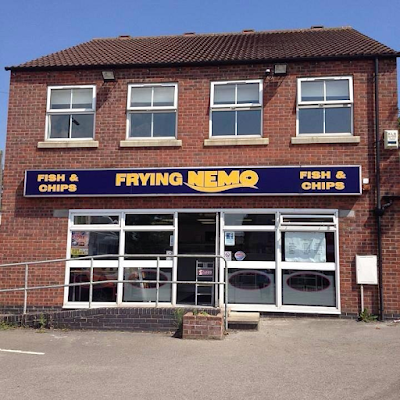
37) There exists a fish and chips place in Yorkshire, England called "Frying Nemo". It is obviously not a Disney-licensed place. I guess the owners heard Marlin's "Why don't we fry them up now and serve them with chips?!" line and got inspired.

38) Finally, the movie's popularity had two different effects on the pet fish population. On the one hand, demand for clownfish as pets skyrocketed. On the other hand, that resulted in a decline of there being a lot of clownfish in the ocean thanks to so many people capturing them to sell them as pets.

In addition, people also took Gill's "Fish aren't meant to be in a box" comment to heart. Many pet fish found themselves flushed down the toilet. There are two problems with this. One, this doesn't automatically mean that the fish is going to wind up in its natural habitat, so this wound up causing some ecological imbalance. Two, Nemo was really lucky that he actually survived his trip down the drain. Many organizations like JWC Environmental and Australia's Marine Aquarium Council released public service announcements warning people that flushing your fish wasn't a good idea.

Sources:
- https://web.archive.org/web/20100123232221/http://www.pixartalk.com/feature-films/nemo/finding-nemo-production-notes/
- The film's DVD commentary

Remember: fish are friends, not food. Except stinkin' DOLPHINS.

Tuesday, January 30, 2024

Did You Know? - Fun Facts About "WALL-E"

Welcome to another edition of a series that I like to call Did You Know?. This series will allow me to share with you some interesting tidbits, behind-the-scenes information, and fun facts about an animated movie or TV series. Because I like sharing new information with people.

Y'all remember WALL-E?

I remember going to see WALL-E in theaters twice. It's definitely one of PIXAR's best, with an environmental message that isn't too preachy, fantastic animation, and a cast of charming characters - a good chunk of whom don't really talk! If you haven't seen it already, it's on Disney Plus. Go watch it right now. I'll wait.

Are you back? Great movie, huh? For today's edition of "Did You Know?", I thought it'd be fun to share a few things about WALL-E that you might not have known. After all, you don't really see people talk much about the movie nowadays - it's mostly lumped in with everything pre-Cars 2 as the GOOD stuff that PIXAR's done, whereas everything post-Cars 2 (with some exceptions) is dubbed the BAD stuff that PIXAR has done. If this blog post can get people to start talking about the movie again, well, I've done my part to shed light on this rarely talked about PIXAR classic.

1) The original pitch for WALL-E was thought up by Pete Docter. His idea was kind of like National Lampoon, with a family of aliens visiting a planet where they were driven crazy by a tiny robot. John Lasseter nixed the idea, but something about the premise of a lone, tiny robot on a planet covered with trash stuck with Andrew Stanton...

Concept art for WALL-E himself.

2) While designing WALL-E himself, Andrew Stanton was insistent that the character should have his own body language, having him constrained by the boundaries of his design - lead character animator Angus MacLane described this as avoiding "dude-in-a-suit or Fozzie Bear acting" and "use a more minimal sense of acting" instead of "having a robot that was puppet-y and moves around a lot". Andrew didn't want WALL-E to at any point pose like a human. He set a "no elbows" rule, since WALL-E was built to pull trash into his belly, which doesn't exactly require elbows, ergo it wouldn't make much sense for him to have them. This made it difficult to figure out how WALL-E could reach the buttons on his trash compactor chest if his arms didn't bend. They considered flexible Dr. Octopus-style arms or limbs that telescoped like a car antennae, then Angus was inspired by his father's job of designing inkjet printers, which use a slide-like mechanism. Having WALL-E's shoulder move along an L-shaped track allowed the animators to subtly tweak the character's posture.

WALL-E's iconic "binocular eyes" came about when somebody handed Andrew Stanton a pair of binoculars at a baseball game. He said, "There's no nose, there's no mouth, there's nothing and it's not trying to be a face. It just happens to ask that of me when I look at it and I said, 'That's it!' I can't improve upon that. So that's why I ran with that." According to Angus, "It's hard for him to be mad. When his binoculars lock together, that forms a straight line across the top of his head, and at most he looks irritated."

More concept art for WALL-E.

3) Obviously, EVE is designed much differently from WALL-E, and it's not a coincidence that she looks like something Apple might have a hand in. Angus MacLane described her as "a bit like a matryoshka doll, in that she starts out like this impenetrable egg, and then she unfolds to be a bit more vulnerable, but functional. She looks dangly and wind-chimney when she's in automaton mode, but when she gets emotional, she does more arcs, like a porpoise flying."

"WALL-E represents the notion of who people actually are," Angus added. "The guy has dreams, and he has chores, he's not the best at everything he does, but he's good at his job. Just as a superhero team would have a bruiser character, that would be WALL-E, whereas EVE is a much more aggressive hero."

Jim Reardon, the head of story, says, "What we didn't want to do on this film was draw human-looking robots with arms, legs, heads and eyes, and have them talk. We wanted to take objects that you wouldn't normally associate with having humanlike characteristics and see what you could get out of them through design and animation."

"One of the nice things is, because they got designed together, we could really play the opposites," Andrew Stanton claimed. "You could play WALL-E as a box... and EVE as a circle. I remember going, a long time ago, probably 1993, to Peter Gabriel's 'Secret World Tour', and he designed the stage so that one side was about the male and the other side was about the female. And one side was square, and the other stage was circular. And I always thought that was fascinating... and he sort of decided which songs would be played whether they were a female song or a male song in their feel on either of the stages, and I never forgot that iconography. And that really did kind of influence, a bit, the fundamental nature of each of these characters... the other thing was that, just the design, we really wanted to be able to play with both spectrums of robotics: really high-end technology and really low technology. So, WALL-E, I always call a tractor, EVE, I always call sort of like a Porsche. She's the highest, most expensive, no expense spared kind of project that the Buy 'n' Large corporation could use to make a probe droid... WALL-E is much more 'nuts and bolts' and you can kind of get how he works from afar."

Concept art for EVE.

4) WALL-E is voiced by the film's sound designer, Ben Burtt. Ben gathered sounds to use in the movie from the real world with a microphone and recorder because, in his words, "When you use sounds gathered in the outside world, and you bring them into a science fiction film, you get a credibility of those sounds to sell the audience the reality of what's really just a very fantastic world."

The sound of the winds on Earth is made from recordings of Niagara Falls - except for the wind sounds heard inside WALL-E's trailer during the toxic waste storm, which were created by dragging a canvas bag across a carpeted floor. A thunder sheet was used to create the sounds of the spaceship taking off. The noise that WALL-E's little cockroach buddy makes when he moves was created by handcuffs. WALL-E's eyebrow movements are accompanied by the sound of a Nikon camera shutter, whereas his sneezes are Ben Burtt sneezing while a vacuum cleaner is running. He created a library of 2400 sounds for the movie, the largest number of all the films he's worked on thus far.

5) While WALL-E doesn't talk much, Andrew Stanton claimed, "I didn't want to do a silent picture. I wanted to do a picture that really played with the integrity of the character that it was, which was a machine. And I wanted it to feel like a machine because I was so smitten with the character of Luxo Jr. before I ever came to PIXAR and I just loved how every ounce of you saw it as an appliance and then you imbued a character on it, which is a lot more impressive and engaging than seeing something that is designed to be a character and trying to make you throw that on it."

Concept art for M-O.

6) EVE's voice actress is PIXAR employee Elissa Knight. Andrew Stanton called her in to do a scratch track, and he liked her performance so much that he decided to just use her as EVE in the movie instead of getting another actress.

7) "WALL-E", for those wondering, stands for "Waste Allocation Load Lifter Earth Class". The gigantic robots seen in the garbage disposal on the Axiom are called WALL-As - which stands for "Waste Allocation Load Lifter Axiom Class". EVE, meanwhile, stands for "Extraterrestrial Vegetation Evaluator".

Concept art for the Axiom.

8) Why is there live action footage in the movie? Andrew Stanton, again, provides the answer - practical reasons. "Once I knew that one of the objects I wanted WALL-E to find would be an old musical, and we would be looking at actual footage, I said 'Well, he's going to be looking at live action people, that sets a precedent.' Now, any time I have him looking at real people, at footage from the past of any humans it should be the same world, so I made them live action humans." He felt he could get away with having the humans WALL-E actually encounters on the Axiom be animated because humans could have just evolved since then (and it would've probably been time-consuming to go all Roger Rabbit and have live action humans interacting with animated robots).

And why have Hello, Dolly be the movie that WALL-E loves so much? Andrew claimed, "It's one of those things, I did it out of pure, unconscious abstraction at first. I just, sort of like an artist sticking two colors together and going, wow, I wonder why that works. I knew I wanted old fashioned against the future and I loved the idea of some sort of old-fashioned music playing against the stars. And there was something about that, I just loved the juxtaposition, and then I started searching around for what the song would be." He took a listen to "Put On Your Sunday Clothes", and decided it would work (and it did... that first scene where we see outer space and hear "Out there... there's a world outside of Yonkers..." always stuck in my mind since I saw the movie). Then Andrew thought some more about what the song was about, and he realized that its being about two guys who want to go into the big city, experience life, and kiss a girl has "such a simple innocence to it that almost is WALL-E." After that, he listened to the other songs and found "It Only Takes a Moment". "Suddenly I realized how powerful these songs could be to convey story and push story along for me. Particularly the idea of holding hands, because I have two characters who can't say 'I love you', they have to find some other way to express it, and holding hands is one of the most intimate things you can do in public with somebody in many cultures, and I thought that was just a perfect way to convey that over the course of the movie, so then I was hooked," Andrew said. Ironically, WALL-E's music was composed by Thomas Newman, who is the nephew of Hello, Dolly's co-scorer Lionel Newman.

9) Before settling on Hello, Dolly songs, Andrew's initial idea was to have French swing music in the movie. He decided against it after the release of 2003's The Triplets of Belleville, which also featured French swing music, and was beaten by Andrew's previously-directed PIXAR film Finding Nemo for the Best Animated Feature Academy Award - Andrew didn't want people to think he was copying that movie.

10) To learn how to tell a story purely through visuals, the filmmakers watched Charlie Chaplin and Buster Keaton movies during their lunch hours. In just eighteen months, they'd managed to watch every single movie starring them.

Insert joke about WALL-E being a hoarder here.

11) For a while, the movie didn't have humans in it, but rather ALIENS (that pigeon from Bolt would approve). These aliens were boneless, gelatinous blobs with their own language and a giant castle at the back of the Axiom, who treated the robots shabbily, which apparently led to WALL-E starting a robot uprising. There was a twist - eventually, it would have turned out that the gelatinous blobs are what humans evolved into.

How did they come up with this idea? According to Andrew Stanton, the filmmakers consulted with a NASA scientist who told them that the reason why they haven't sent a human being to Mars is because if they did, disuse atrophy would kick in at some point - the lack of gravity would result in that human being losing a large percentage of their bones. Andrew thought that would be a perfect thing for people who've become dependent on technology doing everything for them (like the people on the Axiom) to deal with. The reason why they scrapped this idea is because Andrew eventually decided it was too bizarre, and it distanced the audience from the story emotionally. So instead they made the humans giant babies, which I personally think was the right choice over JELL-O aliens.

Incidentally, I fear that with how dependent on technology we've all become, eventually the human race IS going to end up like the humans in WALL-E - fat, lazy idiots who do nothing but sit in flying chairs and have fancy machinery do everything for them. That probably sounds irrational to you, but my fears are generally pretty irrational...

Concept art for the aliens.

12) WALL-E's little cockroach buddy is named Hal. This is a reference to both 1920s film producer Hal Roach and the computer in Stanley Kubrick's 2001: A Space Odyssey (who was also the inspiration for AUTO). The painter robot that WALL-E meets among the robots in need of repair is named VN-GO, after painter Vincent Van Gough. Also, rumor has it that WALL-E himself is named after Walter Elias Disney, but I can't find official confirmation on that.

13) Remember the scene where the Captain is staring at portraits of past Axiom captains? The names of those past captains were taken from writers who worked at PIXAR, and their appearances are caricatures of those very writers (for example, Captain Thompson is named after Derek Thompson, a PIXAR story artist).

14) Andrew Stanton wanted the movie to look as though it was filmed on actual cameras. So he advised the animators to make the focus pulls look real and added lens flares and other camera imperfections. Cinematographer Roger Deakins was brought in as a consultant.

I have no idea what THIS is supposed to be concept art for... maybe the trailer
where WALL-E lives?

15) Early in development, the film was to be called "Trash Planet".

16) Andrew Stanton was determined not do "Disneyfy" Hal. "I took it as a challenge: 'Come on! We can make a cute cockroach! And without the aid of little gloves,'" he said in an interview with The Hollywood Reporter. "And you can. You can make almost anything cute, if you try hard enough."

17) Yes, there are indeed references to other PIXAR movies in the movie. Among the things WALL-E has in his collection are toys of Mike Wazowski from Monsters Inc. and Rex from Toy Story. There's also a piggy bank that may or may not be Hamm. Crush from Finding Nemo appears as well, during the end credits.

Rex is in between the bowling pins.

Speaking of Toy Story, you probably already know that the Pizza Planet Truck is one of the things EVE scans while looking for the plant. But you might not have spotted Skinner's scooter from Ratatouille and some orange traffic cones from Toy Story 2 among the trash, or Luxo Jr. among the things that WALL-E uses to make a statue of EVE, or Carl from Up's walking cane among the things in WALL-E's trailer, or a billboard for Eggman Movers, the same moving company Andy's family used in Toy Story, among the Buy 'n' Large ads. Oh, and those little mouse robots crawling on EVE in the trash compactor? They're called REM-Es, another Ratatouille reference.

Are there any references to non-PIXAR Disney movies? Well, there's a genie's lamp in WALL-E's collection as well. This could be a reference to Aladdin.

You can see the lamp and the piggy bank that may or may not be Hamm in this screencap.

18) AUTO was initially an independently-moving robot as opposed to a sentient steering wheel (similar to EVE, but with a more sinister look). There was a scene where he secretly goes to the databanks of the ship and we'd find out what his agenda was before the other characters did - Andrew Stanton described it as "a very funny scene that was sort of Get Smart of going through these secret doors and stuff and he goes down this long shaft and he has to give this eye scan, in the middle of the shaft, to get the ID to go into this bank, and he leans and his visor just goes tumbling all the way down the shaft." It turned out to not be that interesting.

Andrew Stanton said, "The one character that I did want to have speak, besides WALL-E and EVE having sort of limited skills in saying a single word and phrases, was AUTO. I really wanted AUTO to be the extreme end of programming... which would be a character that, you know, is about as soulless and as zeroes and ones and binary and cold as you could make it." He is "voiced" by the Apple computers' "MacTalk" program, which Andrew thought would be perfect for AUTO because of how monotone and soulless it sounds.

19) I found out about this one from Reddit - if you look closely during the scene where WALL-E is struck by lightning, the electricity charges WALL-E's battery back to full.

20) Production designer Ralph Eggleston was inspired by NASA paintings from the 1950s and 1960s, as well as concept art for Disneyland's Tomorrowland. The PIXAR animation team also made field trips to recycling stations to watch giant trash crushers and other machinery at work.

"The Lorax tried to warn us about this..."

21) Andrew Stanton was thrilled to collaborate with Peter Gabriel for the song "Down to Earth" that plays during the credits. "Working with Peter has been one of the biggest highlights of my professional career," he claimed. "When it came to the ending for our film, I knew that we needed to add some additional story points and create something with a global feel to it. And it suddenly dawned on me that Peter is the father of world music to much of the Western world. I got completely seduced with the idea of putting him and Tom in a room together and seeing what they could come up with. Tom went to London to jam with Peter, and it was like this whirlwind romance. Suddenly, there was this amazing Thomas Newman/Peter Gabriel song called 'Down to Earth' that is just beyond my wildest dreams. Peter's lyrics are so deceivingly simple, but they're spot on. I was so moved when I heard the lyrics, because they were so clever and fit so well. They felt completely indicative of Peter Gabriel, and knowing that it was based on the story I had written and that I had any association whatsoever with, it really blew my mind."

22) Andrew always thought of WALL-E as sort of like a beachcomber, a character that "collected things because he didn't understand what the world was before humanity left". Apparently, it was easy for the folks at PIXAR to think of things for WALL-E to collect - things that would probably fascinate and spark curiosity in a child, but would also "read" very easily onscreen. "I'd say for every one item you actually see in [WALL-E's] truck, there's probably twenty-five to thirty that you never get appreciated... all those shelves truly rotate, they all have different items in each one of them, they all have a little bit of a story behind them," he says in the film's audio commentary on the DVD. Also, the fact that it's a truck was based on the folks at PIXAR's love of Tonka trucks.

23) The sound that WALL-E makes when he's fully charged is the same sound a Macintosh computer makes when it starts up. This could be a reference to how PIXAR and Apple share a co-founder, Steve Jobs. Incidentally, you can hear the same sound in Cars 3 at one point.

Concept art for the interior of the Axiom.

24) The part where the Captain plays with the model of the Axiom and the globe was ad-libbed by Jeff Garlin. This was Jeff's first role in a PIXAR movie - after this, he voiced Buttercup the unicorn in Toy Story 3 and Otis, a car that Mater helps near the beginning of Cars 2.

"Because you're reading into everything, because you don't know what's happened to humanity in seven-hundred years, you don't know what the rules are," Andrew explained, "We found that whenever we played something almost sort of Homer Simpson-esque, people would just assume 'Okay, humanity got dumb. Humanity got really dumb.' And people would not like humanity, or especially the captain representing humanity. So we finally decided to stop doing things like that, and learned how to make [the Captain] just come across as tired, but still very vocal... just unmotivated at first, and it really opened our eyes to how we should be playing the Captain."

25) Y'know that one robot typing on a keyboard? The keyboard consists entirely of ones and zeroes. This is a reference to the binary code of ones and zeroes that technology is made from.

26) The first two humans you see on the Axiom are voiced by Andrew Stanton and Jeff Pidgeon. They were roommates in college, so they thought it'd be natural for them to voice characters having a conversation that goes like this: "What do you wanna do?" "I dunno, what do YOU wanna do?".

As Andrew put it, "We just thought we'd have to fall into old habits to have that discussion."

27) The use of "Also Sprach Zarathustra" when the Captain actually stands up and starts walking was initially just a joke. Then the filmmakers saw test audiences going wild - one member was actually punching the air triumphantly. So they kept it in.

There's a good chance you saw one of these standing in your local movie theater.

28) So where exactly does WALL-E live? I mean, aside from "on Earth, ga-doy". Somebody on Quora.com named Shawn Hoffman did some research and deduced that, since there's at least one nuclear power plant and a wind farm, plus WALL-E's truck sits on the interstate overlooking a large waterway, the spot on Earth where WALL-E lives is somewhere in the eastern seaboard, somewhere around the Carolinas. Somebody else suggested Philadelphia. Another common guess is New York City.

29) Originally, the film just had EVE repair WALL-E and presto, he's back to normal. There was a joke where he noticed a giant hole in the roof of his truck and was confused by it, then EVE blocked his view of it. But the filmmakers realized, that wasn't very dramatic - he's a machine, of COURSE they'd be able to repair WALL-E, why should anybody be worried when he's damaged? So they came up with the "WALL-E initially doesn't remember anything other than his directive of making trash cubes" thing to add a bit more to the ending.

30) To promote the movie, Walt Disney Imagineering built an animatronic of WALL-E, planning to have it roam the Disney theme parks at some point. It showed up in places like the Philadelphia Science Museum, the Franklin Institute, and a D23 expo, but never made it to the parks because there were concerns he could run over somebody's foot. A fan of the film has made his own WALL-E animatronic as well:

31) Here's another fun fact regarding the Hello, Dolly songs - years after the film's release, Andrew Stanton went to see the Broadway revival of the original stage show. Going backstage, he learned that Gavin Creel, who played Cornelius, had a dog named WALL-E, and that one of the dressers had named her daughter after EVE.

This billboard towered over Sunset Boulevard at some point in
2008.

32) The film obviously has an environmental message and a bit of mockery of big corporations with all the Buy 'n' Large stuff. But according to Andrew Stanton, "I wasn't trying to be anti anything. I think I was just trying to go 'Look, too much of a good thing of anything is a cautionary tale.' Honestly, everything I did was in reverse. It was like I've gotta go with trash because I love what it does to my main character and it's very clear, and then I went backwards from that. I said 'Why would there be so much trash?'. Well, it'd be really easy for me to show we'd bought too much stuff and it'd be really easy to show that without having to have it explained and it's kind of fun. It's fun to be satirical like that. You know we all have that sort of Simpsons bent, you know. So I just went with what felt somewhat true. I mean I think we've always felt that we have to be sort of disciplined in that area."

In that interview with The Hollywood Reporter, he added, "I hate being preached to and I assume other people do too in a movie. So I went there very reluctantly, and it ended up being out of pure necessity to my main drive, which was I just wanted to believe in the authenticity of why WALL-E was alone. It was really logic at the time, so we're talking 2005-06, that led me to any of the science and environmental and sociological choices that I did. I just went with kinda what was happening around me. We were having anywhere from two to a dozen boxes from Amazon show up at my doorstep every other day... I just started to think, like, 'Where does all this [CENSORED BECAUSE I WANNA KEEP THIS BLOG PG] go?'"

33) After the end credits, there are three logos. The first is, natch, the Walt Disney Pictures logo. The second is the PIXAR logo, which includes a gag where Luxo Jr.'s bulb goes out. So WALL-E enters the scene and replaces the bulb - look closely and you'll see that the bulb he replaces it with is a more eco-friendly one. And the third logo? It's the one for Buy 'n' Large!

Here's one more fun fact for you... I have a theory that you can put WALL-E in any picture (well, maybe not ANY picture, but you know what I mean) and it'll automatically become hilarious. Let's see if it does:


Well? Does it?

Sources:
- https://variety.com/2008/digital/news/how-to-build-a-better-robot-1117987668/
- https://www.moviefone.com/news/wall-e-pixar-movie-trivia/
- https://www.mentalfloss.com/article/70024/10-space-age-facts-about-walle
- https://www.comingsoon.net/movies/features/45885-wall%C2%95e-writerdirector-andrew-stanton
- https://web.archive.org/web/20080626061223/http:/www.moviesonline.ca/movienews_14899.html
- https://www.hollywoodreporter.com/news/general-news/wall-e-director-andrew-stanton-film-was-inspired-by-amazon-apple-1279519/
- https://ew.com/movies/2018/06/27/wall-e-anniversary-andrew-stanton-hello-dolly/
- https://web.archive.org/web/20110711103245/http://adisney.go.com/disneyvideos/animatedfilms/wall-e/media/downloads/WALLEProductionNotes.pdf
- The film's DVD commentary

Well, there you go. Thirty-three (technically thirty-four, but thirty-three REAL ones) fun facts about WALL-E. Usually I only have thirty-one fun facts in these "Did You Know?"s, but I decided to do thirty-three this time. Maybe I'll do thirty-three in ALL of my "Did You Know?"s from now one. We'll just have to wait and see...